Short answer
Split the posting into must-haves and nice-to-haves. If you can show most of the must-haves with real examples, apply. A missing nice-to-have rarely rules you out, but a missing must-have, like a required license, usually does.
Do I need to meet every requirement?
Usually not.
Postings often describe an ideal candidate. What matters is whether you can do the core of the job. Requirements written as "preferred", "bonus" or "nice to have" are not deal-breakers.
How do I check my fit, step by step?
Four steps.
- List the must-haves: the duties described as the main job, and anything marked "required", like a license, degree or years of a specific experience.
- List the nice-to-haves: tools, industries and extras marked "preferred" or "a plus".
- For each must-have, find a real example in your resume. Mark the ones you can't show.
- Decide: if you can show most must-haves, apply. If you're missing one that's truly required, look for a closer role.
What if I'm missing something?
Name the gap, then show the closest thing you have done.
If you've done a related version, put it on your resume in the job's terms, honestly. In the interview, say how you'd close the gap. If the gap is a hard requirement like a license, that's usually a no.
Can a fit score tell me?
It's a guide, not a verdict.
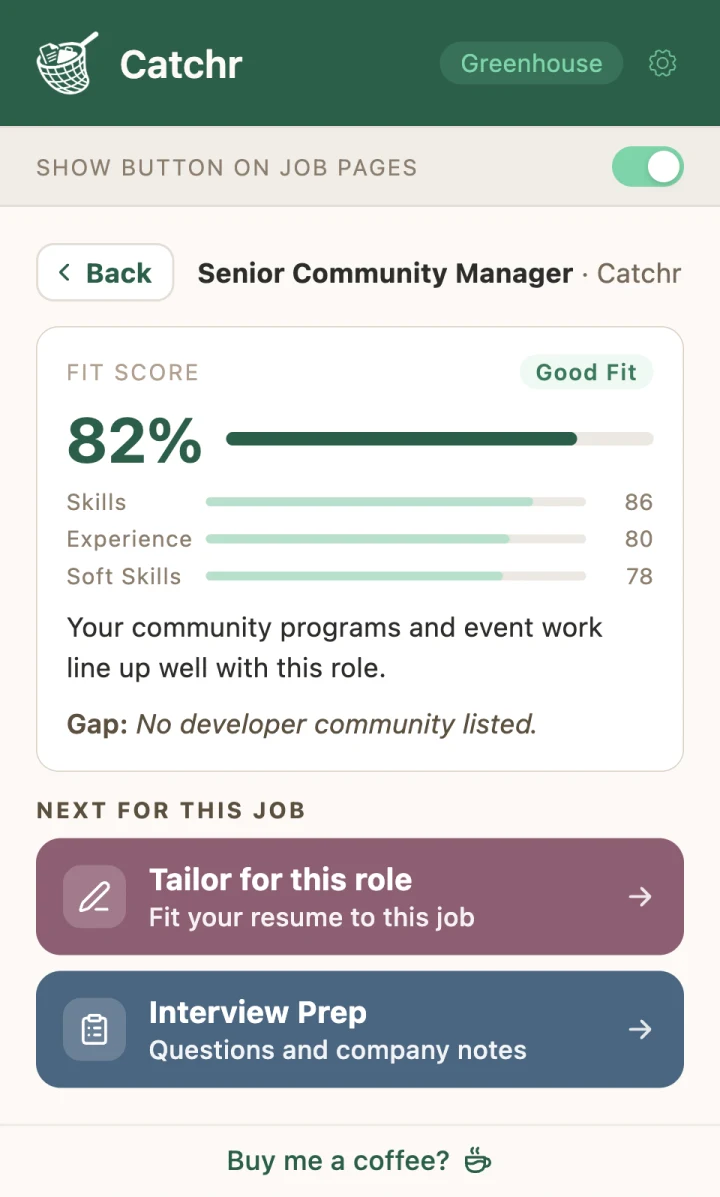
Catchr's Check Fit compares your resume with the job description and gives a score from 0 to 100, split into skills, experience and soft skills, with what matches and what's missing. The same job can score a few points differently from one check to the next, and AI can make mistakes. Read the matches and gaps, not just the number.
 Add to Chrome, it's free